
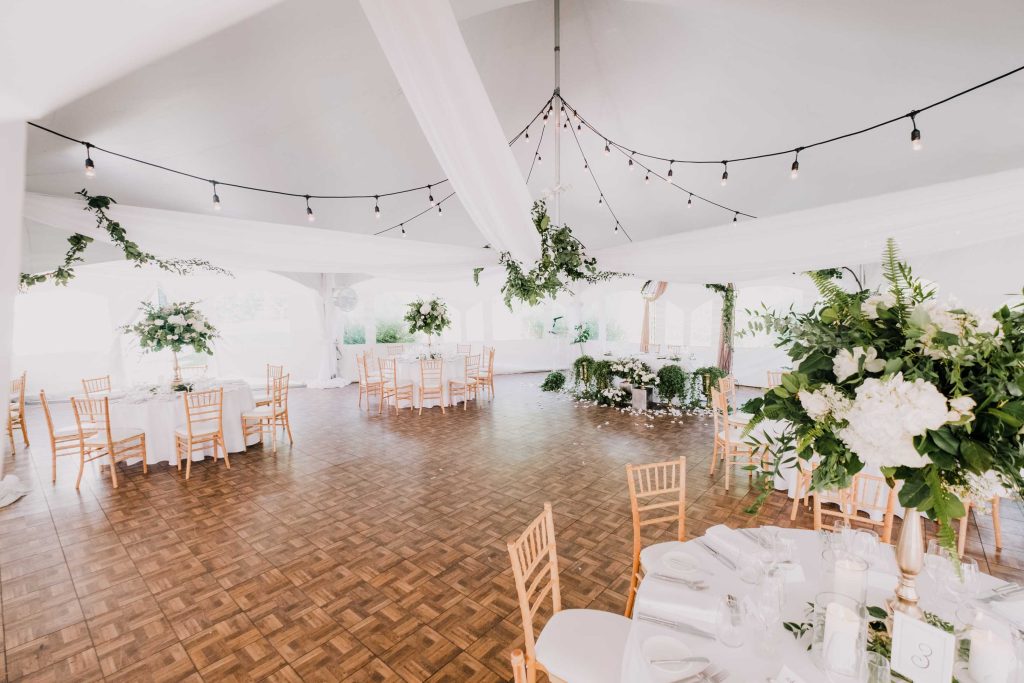
A tent is often viewed as a practical solution. Something that provides shelter and defines a space. In reality, tent design plays one of the most important roles in shaping the overall look and experience of a wedding.
A well designed tent creates structure where none exists. It defines the ceremony and reception layout, establishes flow, and sets the scale of the event. The placement of the tent determines how guests move through the space and how the celebration unfolds from one moment to the next.
Design elements within the tent transform it from functional to refined. Draping, lighting, flooring, and ceiling treatments all contribute to the atmosphere. These details influence how the space feels during the day and how it transitions into the evening. When thoughtfully layered, a tent becomes an extension of the overall design rather than a backdrop.
Tent decor also plays a critical role in cohesion. Florals, table settings, and furniture must work in harmony with the structure of the tent. Proportions matter. Balance matters. Every choice should feel intentional and aligned with the setting.
Beyond aesthetics, tent design requires planning and coordination. Timelines, installation logistics, and weather considerations must be managed carefully to ensure a smooth execution. When done properly, guests never notice the complexity behind the scenes. They simply experience a beautifully curated environment.
A tented wedding offers freedom and flexibility, but it also requires expertise. Thoughtful tent design allows outdoor spaces to feel elevated, comfortable, and timeless, creating an experience that feels purposeful rather than improvised.